
About This Trek
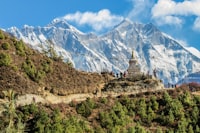
The Annapurna Circuit is widely regarded as one of the world's greatest trekking routes. This legendary journey takes you completely around the Annapurna Massif, offering an extraordinary combination of stunning mountain vistas, diverse ethnic cultures, and dramatic landscapes that shift from subtropical forests to high-alpine desert.
The route follows ancient trading paths through the Marsyangdi and Kali Gandaki valleys, crossing the mighty Thorong La Pass (5,416m) — a defining moment of the trek. You'll pass through Gurung, Manangi, and Thakali villages, each with their own distinct culture, cuisine, and architecture.
This is not just a trek — it's a complete Himalayan immersion spanning every ecological zone Nepal has to offer.
Detailed Itinerary
Day 1–2: Arrival in Kathmandu & Drive to Besisahar
Arrive Kathmandu, hotel briefing and gear check. Day 2: scenic drive (6–7 hrs) through terraced hillsides to Besisahar (760m), the traditional circuit start point.
Day 3: Besisahar to Bahundanda (1,310m)
Trek through dense subtropical forests and lush green valleys with first views of the Himalayan foothills. Cross several suspension bridges over the Marsyangdi River.
Day 4: Bahundanda to Chamje (1,430m)
Continue through the scenic Marsyangdi Valley, passing waterfalls and local villages. The valley narrows as you enter the foothills gorge section.
Day 5: Chamje to Chame (2,710m)
Trek through apple orchards and pine forests. Chame, the district headquarters of Manang, has shops, bakeries, and the first clear views of Annapurna II and IV.
Day 6: Chame to Pisang (3,300m)
Walk through a dramatic deep gorge with a huge curved rock face above. Upper Pisang offers panoramic views of the Annapurna range and Pisang Peak (6,091m).
Day 7: Pisang to Manang (3,519m)
Take the upper or lower trail to Manang. The high route passes ancient Ghyaru and Ngawal villages with spectacular mountain panoramas including Gangapurna and Annapurna III.
Day 8: Manang Acclimatization Day
Essential rest day for altitude acclimatization. Hike to the Himalayan Rescue Association clinic for the altitude sickness lecture, visit Gangapurna Lake, or explore the Ice Lake (4,600m) for active acclimatization.
Day 9: Manang to Yak Kharka (4,018m)
Leave the lush valley behind and enter high alpine terrain. Trek across open meadows used by yak herders with dramatic views of Chulu East and West peaks.
Day 10: Yak Kharka to Thorong High Camp (4,925m)
Short but steep ascent to the high camp. Acclimatize by resting in the afternoon — crucial preparation for the early morning pass crossing. Stunning sunset views of the Annapurna peaks.
Day 11: Thorong La Pass (5,416m) to Muktinath (3,800m)
The most challenging and rewarding day. Depart at 4–5am, summit the legendary Thorong La Pass at sunrise with 360° panoramic views of the Himalaya. Descend steeply to sacred Muktinath — one of the holiest sites for both Hindus and Buddhists.
Day 12: Muktinath to Jomsom (2,720m)
Descend through the dramatic Kali Gandaki gorge — the world's deepest valley. Jomsom is the capital of Mustang district, with strong Tibetan cultural influence and constant winds in the afternoons.
Day 13: Jomsom to Marpha (2,670m)
Optional extension day. Walk to charming Marpha village — famous for its apple orchards, apple brandy, and immaculate white-washed streets. A beautiful and peaceful Thakali village.
Day 14: Fly Jomsom to Pokhara
Dramatic 20-minute mountain flight back to Pokhara. Afternoon free to explore Phewa Lake, the Lakeside area, or simply relax after your incredible achievement.
Day 15–16: Pokhara to Kathmandu & Departure
Scenic drive or flight back to Kathmandu. Final celebration dinner, souvenir shopping in Thamel, and transfer to the airport for your onward journey.
Trek Highlights
What's Included
Best Time to Trek
🍂 Autumn (Sep – Nov)
The golden season. Clear skies, excellent visibility, warm days, and crisp mountain air. The most popular time with stable weather after the monsoon.
🌸 Spring (Mar – May)
Rhododendron forests burst into bloom across the lower elevations. Clear mornings give way to afternoon clouds. Generally excellent conditions.
❄️ Winter (Dec – Feb)
Cold but feasible at lower elevations. Thorong La Pass can be challenging with heavy snow and the risk of closure. Not recommended for most trekkers.
🌧 Monsoon (Jun – Aug)
Heavy rainfall, leeches on trail, and limited views. Not recommended. The Mustang section (rain shadow) is an exception and popular during monsoon.
Important Notes
Fitness Level: Good cardiovascular fitness required. Regular hiking, cycling, or cardio training for 2–3 months beforehand is strongly recommended.
Altitude Sickness: The high altitude at Thorong La (5,416m) is a serious consideration. Our guides are trained in altitude sickness recognition and management. Acclimatization days are non-negotiable.
Travel Insurance: Comprehensive travel insurance with high-altitude trekking and emergency helicopter evacuation coverage is mandatory.
Thorong La Closure: In rare cases, the pass may be closed due to heavy snowfall or storms. Our guides will make safety-first decisions, and alternative plans are always prepared.